
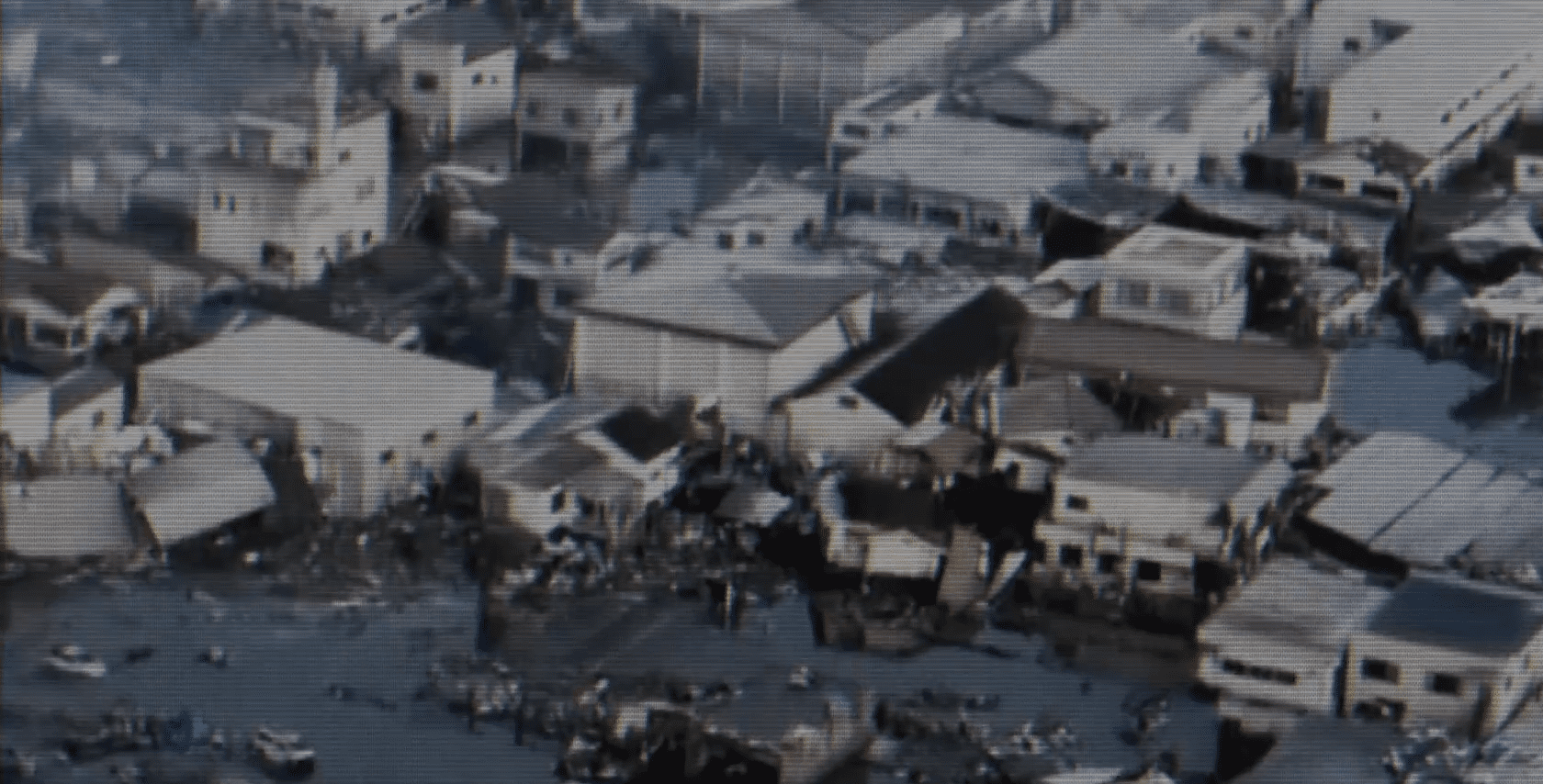
FUKUSHIMA: A NUCLEAR NIGHTMARE is a new HBO Original documentary that revisits one of the most frightening nuclear disasters of the modern era. Directed by James Jones (known for HBO’s “Chernobyl: The Lost Tapes”) and co-directed by Megumi Inman (“Atomic People”), the feature-length film debuts on Tuesday, March 10 (9:00–10:40 p.m. ET/PT) on HBO and will also be available to stream on HBO Max.
The documentary focuses on the critical nine days in March 2011 when Japan stood on the edge of an unprecedented nuclear catastrophe. It combines real-time reconstruction, exclusive testimonies, and a powerful human perspective to show just how close the world came to disaster.

A tsunami, a power plant, and an unthinkable threat
In March 2011, a 9.0-magnitude earthquake, the strongest ever recorded in Japan, struck off the country’s northeast coast. The quake triggered a massive tsunami that devastated coastal communities. Entire towns disappeared under the water. Around 20,000 people lost their lives.
However, the disaster did not end with the flood. At the Fukushima Daiichi nuclear power plant, the giant wave crippled the cooling systems of three reactors. With no cooling, temperatures rose quickly. Radiation levels surged. Hydrogen explosions tore through parts of the facility, shocking viewers around the world.
Japan’s leaders suddenly faced a terrifying scenario: they might need to evacuate Tokyo, the world’s largest metropolitan area, home to roughly 35 million people. FUKUSHIMA: A NUCLEAR NIGHTMARE explores this moment in detail, explaining how and why decision-makers feared a chain reaction that could devastate a vast region.
Nine harrowing days, reconstructed in real time
One of the documentary’s key strengths is its structure. FUKUSHIMA: A NUCLEAR NIGHTMARE reconstructs the nine days following the earthquake and tsunami with forensic, real-time precision.
The film moves through three main levels:
- The control rooms at Fukushima Daiichi, where engineers fight to prevent a total meltdown.
- The corridors of political power, where leaders weigh impossible choices and consider worst-case scenarios.
- The lives of ordinary citizens, who try to understand the danger amid confusion and conflicting information.
By switching between these perspectives, the documentary gives viewers a complete picture of the crisis. It shows how technical failures, political pressure, and human fear interacted in a rapidly changing emergency. The result is a tense, immersive narrative that feels almost like a thriller, even though it is entirely factual.
The Fukushima 50: a mission that could have been fatal
At the heart of the film is the group of power plant workers who stayed behind to try to stabilize the reactors. Under the direction of Japan’s prime minister Naoto Kan, these workers were sent on a mission that many considered potentially suicidal.
Later known as the “Fukushima 50,” they spent days in darkness and isolation inside damaged reactor buildings. They faced rising radiation, structural damage, and constant uncertainty about whether their next step could trigger a catastrophic explosion. Every decision carried enormous risk, and every hour could be their last.
For years, many of these workers avoided the spotlight. Instead of being celebrated as heroes, some carried guilt, shame, or social stigma over what had happened. FUKUSHIMA: A NUCLEAR NIGHTMARE changes that narrative. For the first time, the control-room supervisor on duty when the crisis began, Ikuo Izawa, and others present during those days speak in depth about their experiences. Their testimonies add a deeply human dimension to a story often told only in numbers, diagrams, and headlines.
Voices from the front lines and behind the scenes
The documentary brings together a wide range of firsthand voices to tell the story from multiple angles. Interviewees include:
- Fukushima nuclear power plant engineers
- Government advisors
- American consultants
- Journalists
- TEPCO officials
- Emergency responders
These different perspectives reveal the technical difficulties of cooling damaged reactors, the political tensions between local and national authorities, and the personal cost borne by workers and families. Viewers gain a rare inside look at how information was managed, how decisions were made under extreme pressure, and how close Japan came to a far worse outcome.
Production and creative team
FUKUSHIMA: A NUCLEAR NIGHTMARE is presented by HBO Documentary Films and produced by Blast Films in association with Dogwoof. The project brings together filmmakers with strong experience in investigative and historical non-fiction.
Key credits include:
- Director: James Jones
- Co-director and producer: Megumi Inman
- Executive producers: Tanya Winston, Sacha Baveystock, James Jones, Danny Horan
- Executive producers for Dogwoof: Anna Godas, Oli Harbottle
- Executive producers for HBO: Nancy Abraham, Lisa Heller, Tina Nguyen
This team has a track record of delivering documentaries that combine rigorous reporting, strong visual storytelling, and emotional depth. Their approach ensures that the Fukushima story is handled with both technical clarity and human sensitivity.
FUKUSHIMA: A NUCLEAR NIGHTMARE will debut on HBO and will also be available to stream on HBO Max, making it accessible to a wide international audience.
Why this documentary matters today
More than a decade after the Fukushima disaster, questions about nuclear energy, climate change, and disaster preparedness remain central to public debate. This documentary does not simply revisit old news. It offers:
- A step-by-step reconstruction of how a complex, high‑risk system failed under extreme stress.
- A human portrait of workers and leaders facing impossible choices.
- A reminder of how quickly a natural disaster can escalate into a global crisis.
For viewers, it is also a chance to move beyond headlines and soundbites and understand what really happened inside the plant and inside government offices during those nine critical days.
If you are interested in energy policy, modern history, crisis management, or simply powerful human stories under pressure, FUKUSHIMA: A NUCLEAR NIGHTMARE offers essential context and insight.
how to watch FUKUSHIMA: A NUCLEAR NIGHTMARE
FUKUSHIMA: A NUCLEAR NIGHTMARE premieres on HBO on Tuesday, March 10 (9:00–10:40 p.m. ET/PT) and will be available to stream on HBO Max.
If you are a filmmaker or just an aspiring one, you can learn filmmaking by purchasing this book. Get it from our shop , Amazon or Barnes & Noble.

This article contains affiliate links. If you click and make a purchase, we may receive a commission. Thank you for your support!
🎥 Follow The Hidden Review!
Stay ahead with the latest news, reviews, and interviews. Gain tips from our Blog and exclusive insights. Get behind-the-scenes updates on movies, TV shows, and more!
📌 Don’t miss out—hit that subscribe button and tap the bell for notifications. 🔔
🔍 Stay in the know with The Hidden Review:
✨ Discover what’s hidden, only with The Hidden Review.
©2026 The Hidden Review