
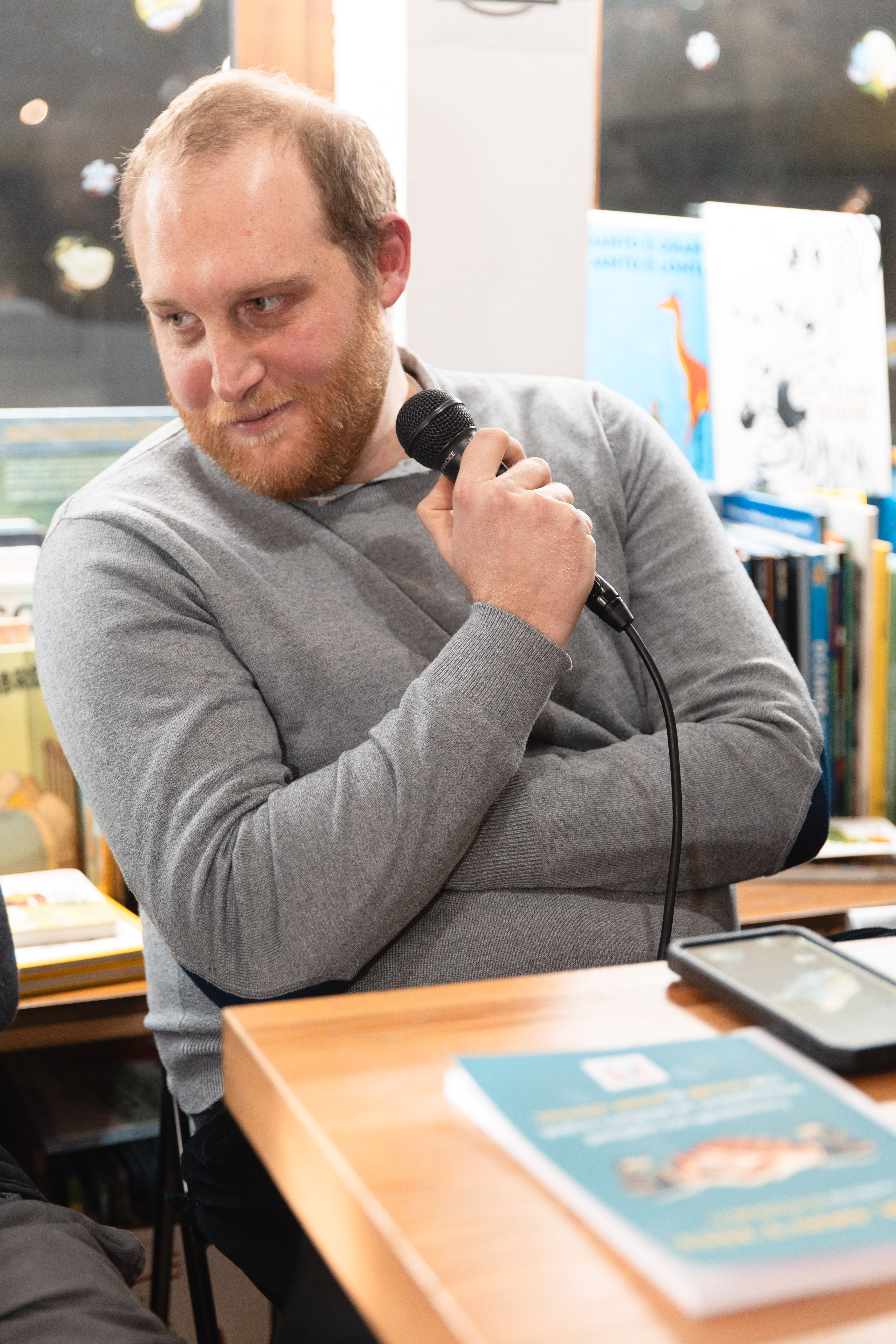
Pip: There is a book called “Show, Don’t Tell”—and its launch event in Naples did exactly that, turning a bookshop evening into something closer to a civic reckoning.
Mara: The Hidden Review covered that event in depth—culture, memory, and social redemption through cinema and theater. Let’s start with what happened at the Libreria Raffaello and why it mattered.
Culture, Memory, and Social Redemption in Naples
Mara: On March 18th, the presentation of “Show, Don’t Tell” by AL Fenderico at the Libreria Raffaello in Naples brought together teachers, institutional representatives, and community voices — all gathered around the idea that culture can function as social therapy.
Pip: The event didn’t stay theoretical for long. The post quotes Fenderico’s appeal directly: “cultura e salute mentale non sono optional, ma diritto e dovere collettivi” — culture and mental health are not optional, but a collective right and duty.
Mara: That framing carries real weight because of who was in the room. Alessandra Clemente, Davide D’Errico, and Fenderico himself each named a personal loss — Silvia Ruotolo, Lucio D’Errico, and Chiara Gualzetti — victims of camorra violence and femicide. The evening was built on those absences.
Pip: So the argument isn’t abstract. The claim is that grief, handled collectively through storytelling and performance, becomes prevention rather than paralysis.
Mara: Fenderico drew on Kropotkin to ground that claim — the idea that moral sense grows from social life and the capacity to identify with others. Theater and cinema, in this reading, are concrete tools for building empathy and emotional intelligence in young people.
Pip: A Spider-Man quote in a Kropotkin argument is a choice — but “with great power comes great responsibility” lands differently when the power being named is thought, love, and culture.
Mara: The book itself, “Show, Don’t Tell,” is described as an operational manual for turning an idea into an audiovisual project — but also as an invitation to use storytelling as a space for care and self-awareness. The school audience made that dual purpose visible.
Mara: The evening also previewed Fenderico’s forthcoming novel “Belong” — co-written with Carlo Finale, already award-recognized at festivals in Los Angeles, Naples, and London, and due out in both Italian and English editions. The release date hasn’t been announced yet.
Pip: The through-line across all of it — the book, the novel, the event — is that no story of pain should stay invisible.
Mara: And that the work of making it visible belongs to schools, families, institutions, and the arts community together — not to any one of them alone.
Pip: Which is, in the end, what a room full of people at a bookshop on a Tuesday in Naples was actually doing.
Pip: Culture as prevention, storytelling as care — those ideas don’t stay in a bookshop.
Mara: They don’t. Back next time with more from The Hidden Review — more territory worth uncovering.