
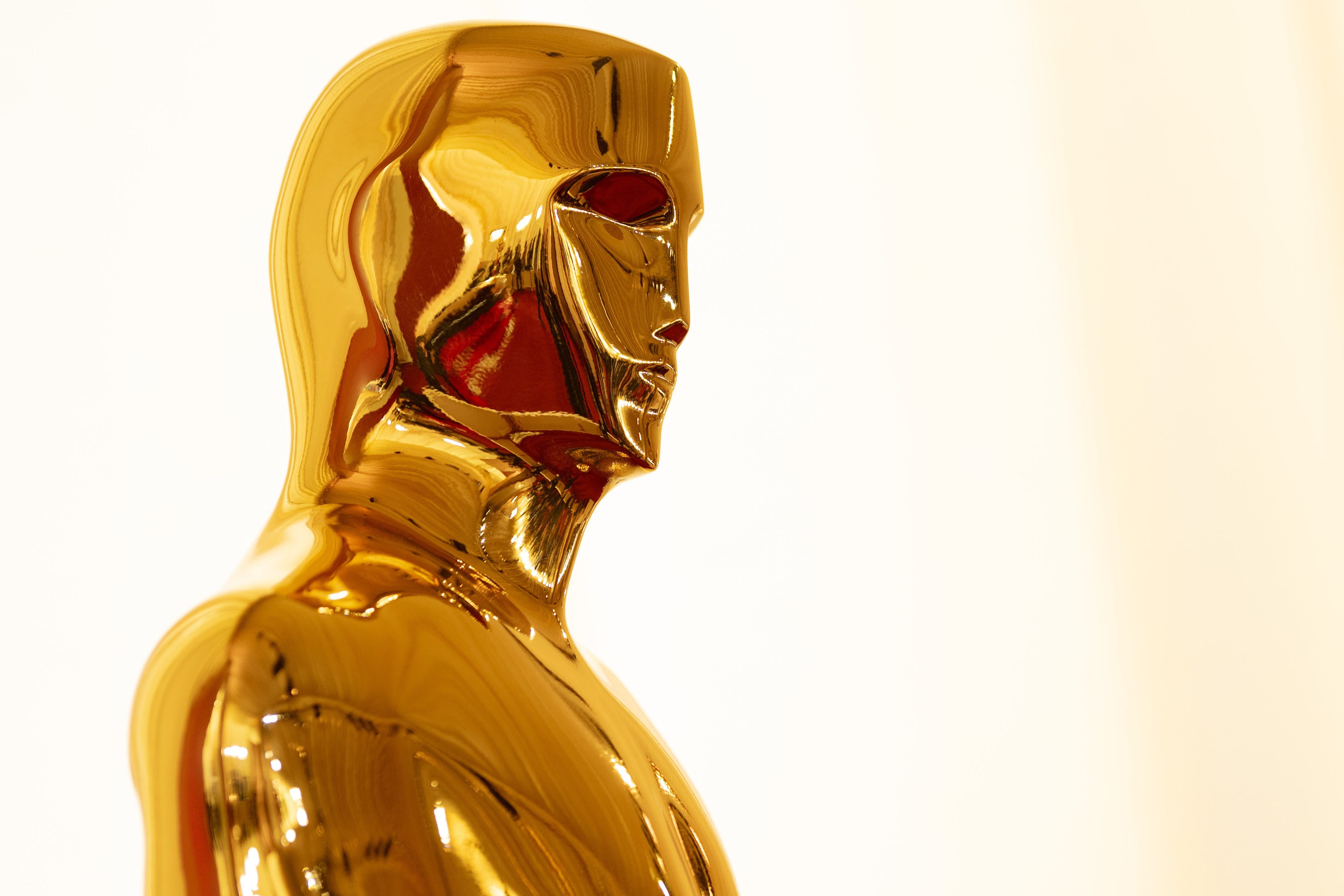
The Academy of Motion Picture Arts and Sciences announced details about the upcoming awards. Fifteen scientific and technical achievements will be honored. These achievements are represented by 27 individual award recipients. The event will take place on Tuesday, April 28, 2026, at the Academy Museum of Motion Pictures in Los Angeles. These prizes recognize key innovations in filmmaking. They include the Technical Achievement Award, the Scientific and Engineering Award, and the Scientific and Technical Service Award. They have been doing so since 1931.
Honoring innovation that shapes the art and craft of film
“The Academy is honored to announce this year’s Scientific and Technical Awards recipients. Their extraordinary achievements continue to shape the art of filmmaking. They influence the craft of filmmaking,” said Academy CEO Bill Kramer and Academy President Lynette Howell Taylor. “Their innovation, dedication, and technical excellence have had a profound impact across our industry. They enable filmmakers to bring powerful stories to audiences around the world. We are thrilled to celebrate these individuals and achievements.”
“This year’s awards celebrate a global community of innovators. They solve the industry’s most complex technical challenges.” Darin Grant and Rachel Rose, co‑chairs of the Academy’s Scientific and Technical Awards Committee, added this observation. “These technologies enhance the safety of practical effects with lead‑free bullet hits. They push the limits of stop‑motion animation and sound restoration. These innovations are now fundamental to the craft. We are honored to recognize the brilliant minds behind these tools, which continue to elevate the moviegoing experience.”
Technical Achievement Awards
- Brent Bell – for the research and development of safe, reliable and effective small lead‑free pyrotechnic devices used extensively in motion picture productions. His work at De La Mare Engineering, Inc. modernized industry‑standard bullet hits with a high‑output, lead‑free product line based on extensive chemical research and precise manufacturing.
- Josef Köhler – for developing the first small lead‑free pyrotechnic devices available at scale. Through Josef Köhler Pyrotechnics, he offered a non‑toxic, low‑flash alternative. This solution preserved practical bullet hits. It also met strict European safety and environmental standards.
- Ian Medwell – for developing small lead‑free pyrotechnic devices widely used in UK productions. Sterling Pyrotechnics’ high‑performance, lead‑free squibs offer a non‑toxic, repeatable solution compatible with legacy bullet‑hit systems.
- Andrea Weidlich – for research on layered materials. She implemented layering operators and BSDFs in Wētā FX’s Manuka renderer. This work enabled more physically accurate, photorealistic materials. It also influenced the wider VFX industry.
- Luca Fascione – for the initial design and development of the layered materials system at Wētā FX. Its architecture is efficient and flexible in Manuka. This has supported ever‑larger productions. It also gives artists both creative freedom and physical realism.
- Vincent Dedun and Emmanuel Turquin worked on design, architecture, and engineering. Jonathan Moulin contributed to design and creative vision. They collaborated on Lama at Industrial Light & Magic, an artist‑friendly layered material framework. Lama’s modular, physically plausible system expanded and accelerated shading workflows at ILM and has been widely adopted through Pixar’s RenderMan.
- Josh Bainbridge and Nathan Walster – for the design, architecture and engineering of the layered shading system at Framestore. It was one of the first modular workflows to combine material layers in a physically plausible way. This approach enables diverse, realistic looks across a wide creative slate.
- Bret St. Clair and Marc‑Andre Davignon (brushing and patching tools), Pav Grochola and Edmond Boulet‑Gilly (Superdraw and Kismet linework tools) – They created a suite of tools at Sony Pictures Imageworks. This suite enabled large‑scale deployment of custom artistic styles in animation. It has inspired stylized looks across the industry.
- Baptiste Van Opstal, Jeff Budsberg, Michael Losure, Jon Lanz, Eszter Offertaler – for contributions to the stylized animation toolset at DreamWorks Animation. Their work includes linework authoring and animation. They developed novel brushing and stamping methods that support painterly and art‑driven styles with fine artistic control.
- Benjamin Graf – for the design, engineering and development of dxRevive Pro. It has transformed modern dialog restoration by combining noise reduction, layered separation, and resynthesis. This combination maintains realism and emotional fidelity. It significantly reduces the need for ADR.
- John Ellwood (metadata/timecode rules and heuristics) and Jeff Bloom (waveform matching) – for the Titan auto‑assembly software for digital audio. This software pioneered automatic session assembly. It became a benchmark for subsequent sound‑editing systems.
- Marc Joel Specter – for the design and development of the Kraken Dialogue Editors Toolkit. It features an intuitive interface. The toolkit also includes transcription‑driven asset management that speeds dialogue assembly. Furthermore, it offers visual tools to identify and resolve issues.
- Justin Webster – for the design and engineering of Matchbox. It is an audio and video matching system that enables auto‑reconform. It provides precise insight into differences between files. The system allows rapid updates while preserving previous creative work.
- Paul Debevec – for pioneering work in high dynamic range, image‑based lighting techniques. Debevec demonstrated and championed HDR image‑based lighting. He helped the industry adopt new workflows. These workflows greatly improved productivity and realism in CG imagery.
Scientific and Engineering Award
- Jamie Caliri and Dyami Caliri – for the design, engineering and continuing development of the Dragonframe software suite. Dragonframe’s integrated toolset has transformed stop‑motion animation. It has replaced fragmented, error‑prone methods. This enables precise, scalable, frame‑accurate control for creators around the world.
Unlike other Academy Awards presented this year, achievements receiving Scientific and Technical Awards are not limited to a specific eligibility year. These awards recognize achievements that have demonstrated a long-term impact. They offer significant value to the motion picture production process.
If you are a filmmaker or just an aspiring one, you can learn filmmaking by purchasing this book. Get it from our shop , Amazon or Barnes & Noble.

This article contains affiliate links. If you click and make a purchase, we may receive a commission. This is at no additional cost to you. Thank you for your support!
🎥 Follow The Hidden Review!
Stay ahead with the latest news, reviews, and interviews. Gain tips from our Blog and exclusive insights. Get behind-the-scenes updates on movies, TV shows, and more!
📌 Don’t miss out—hit that subscribe button and tap the bell for notifications. 🔔
🔍 Stay in the know with The Hidden Review:
✨ Discover what’s hidden, only with The Hidden Review.
©2026 The Hidden Review