
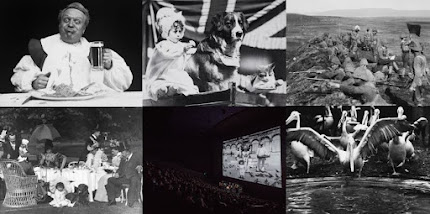
The Mutoscope and Biograph Collection at Eye Filmmuseum now includes over 300 films and has been inscribed on UNESCO’s Memory of the World Register, as announced by the United Nations. It is the largest existing collection of early large‑format 68mm films worldwide, with more than 200 titles, alongside notable holdings at the BFI National Archive, the Museum of Modern Art (MoMA), and the French archive CNC – Centre national du cinéma et de l’image animée.
A legacy of film heritage
The Mutoscope and Biograph collection now stands beside other film archives already on the UNESCO Register, including the Jean Desmet Collection at Eye Filmmuseum (inscribed 2011), the Mitchell & Kenyon Collection and GPO Film Unit Collection at BFI (2011), and Alfred Hitchcock’s silent films (2012) in the UK register. UNESCO’s Memory of the World programme aims to safeguard and share documentary heritage of outstanding global significance, which also includes treasures like Anne Frank’s diary, the archives of the Dutch East India Company, and the Magna Carta.
What is the Mutoscope and Biograph Collection?
The collection is named after the New York‑based American Mutoscope and Biograph Company, founded in 1895 by film pioneer William Kennedy‑Laurie Dickson. Dickson, who had previously worked with Thomas Edison, helped develop the 35mm format and later patented an innovative 68mm large‑format system for both projection and mutoscope viewers. All films in this collection were shot on the unique 68mm Biograph camera, a format four times the size of standard 35mm and capable of extraordinarily high‑resolution images in one‑minute shorts that remain among the sharpest in early cinema.
A cinematic window to history
From 1896 onward, Biograph camera operators traveled the world, recording the transition from the 19th to the 20th century and the dawning of modernity. Subjects range from royal ceremonies—such as Queen Wilhelmina’s coronation—to iconic views of New York, London, Paris, Berlin, and Venice’s Grand Canal, as well as the launch of the RMS Oceanic and scenes from the Boer War in South Africa. The films also feature European royal families, politicians, military leaders, and everyday street life, originally shown in music halls, theatres, and opera houses before purpose‑built cinemas existed.
The “IMAX of the 19th century”
Because of the 68mm format’s exceptional clarity and large image area, Biograph films are often described as the “IMAX of the 19th century,” with detail comparable to today’s 8K–16K digital standards. They are prized for their depth of field and image quality, which make the viewing experience strikingly immersive even by modern standards.
Preserving a fragile heritage
Nearly 130 years old and made on thin, highly flammable celluloid, these films demanded innovative restoration methods. Specialists at the BFI National Archive, Eye Filmmuseum, and Dutch lab Haghefilm developed frame‑by‑frame scanning workflows, resulting in high‑resolution restorations showcased as The Great Victorian Moving Picture Show at the 2018 BFI London Film Festival and later compiled as The Brilliant Biograph. This program is now available as a free, musically accompanied digital presentation on BFI Player (UK) and Eye Film Player (Netherlands).
Voices from the experts
BFI Executive Director Arike Oke has stressed how these films function as vivid windows into past lives and cultures, while highlighting the skill and dedication behind their conservation. BFI silent film curator Bryony Dixon has described the sensation of watching these Victorian‑era moving images as “the nearest thing to time travel.” From Eye Filmmuseum, curator Elif Rongen has emphasized the technical innovation and competitive experimentation they represent within early cinema history.
Accessing the collection today
In 2019, the BFI digitized more than 700 British Victorian films—many in 4K—from original materials, making them freely accessible to UK audiences via BFI Player. A selection of 50 Mutoscope and Biograph titles from Eye and BFI has since been restored up to 8K and presented in The Brilliant Biograph: Earliest Moving Images of Europe (1897–1902), viewable via BFI Player in the UK and Eye Film Player in the Netherlands.
🎥 Follow The Hidden Review!
Stay ahead with the latest news, reviews, and interviews. Get tips from our Blog and exclusive insights. Enjoy behind-the-scenes updates on movies, TV shows, and more!
📌 Don’t miss out—hit that subscribe button and tap the bell for notifications. 🔔
🔍 Stay in the know with The Hidden Review:
✨ Discover what’s hidden, only with The Hidden Review.
©2025 The Hidden Review
Leave a Reply